| Hair Tissue Mineral Analyses (HTMA) |
A tissue mineral analysis or hair analysis provides a unique reading of heavy metal and mineral levels in the cells over a two to three month period. It takes into consideration that toxins are stored in the tissues of the body, not in the blood.
For instance, you can have normal copper levels in the blood, but high copper levels in the tissues.
The reason hair is used for testing mineral status and metabolic activity is because of its very nature.
Our hair is formed from clusters of specialized cells that make up the hair follicle. During the growth phase, the hair is exposed to the internal environment such as blood, lymph and extra-cellular fluids. As the hair continues to grow and reaches the surface of the skin, its outer layers harden, locking in the metabolic products accumulated during the period of formation. This biological processs provides a blueprint and lasting record of metal content and nutritional metabolic activity that has occured during this time.
The precise analytical method of determining the levels of minerals in the hair is a highly sophisticated technique: when performed to exacting standards and interpreted correctly, it may be used as a screening aid for determining mineral deficiencies, excesses, and/or imbalances. HTMA provides you and your healthcare professional with an economical and sensitive indicator of the long-term effects of diet, stress, toxic metal exposure and their effects on your mineral balance that is difficult to obtain through other clinical tests.
It is important for the attending healthcare professional to determine your mineral status as minerals are absolutely critical for life and abundant health. They are involved in and are necessary for cellular metabolism, structural support, nerve conduction, muscular activity, immune functions, anti-oxidant and endocrine activity, enzyme functions, water and acid/alkaline balance and even DNA function.
Many factors can affect mineral nutrition, such as: food preparation, dietary habits, genetic and metabolic disorders, disease, medications, stress, environmental factors, as well as exposure to heavy metals. Rarely does a single nutrient deficiency exist in a person today. Multiple nutritional imbalances however are quite common, contributing to an increased incidence of adverse health conditions. In fact, it is estimated that mild and sub-clinical nutritional imbalances are up to ten times more common than nutritional deficiency alone.
To get an idea of how helpful a hair tissue analysis can be, think about this: Researchers using tissue mineral analysis determined, more than 100 years after Napoloen Bonaparte's death, that he had been poisoned by arsenic. Even though his hair sample was tested more than a century after his death, it still revealed pathological amounts of arsenic that had gradually proved fatal. |
|
Introducing The Comprehensive
Hair Analysis by Trace Elements, Inc |
|
A hair analysis usually needs to be obtained through a health care professional (which can be expensive). However, we offer a service that allows you to get a comprehensive hair tissue mineral analysis from a federally licensed laboratory called Trace Elements, Inc.
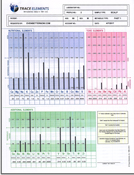
Each hair analysis contains a detailed 10-15 page report from the laboratory itself, which shows bar graph readings indicating high, low and reference range levels for toxic metals, essential minerals and significant mineral ratios. |
|
It also includes a metabolic profile, recommendations for diet and supplements based on individual results.
Unlike some labs that test hair tissue analysis, Trace Elements, Inc. does not wash the hair at the lab. Washing the hair removes some of the loosely bound minerals and can reduce some mineral readings by 50 percent or more. The hair sample is prepared in their licensed clinical laboratory by using a series of chemical and high temperature digestive procedures. Testing is then performed using highly sophisticated detection equipment and methods to achieve the most accurate and precise results.
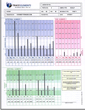
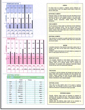
The Comprehensive Hair Tissue Analysis report details graph results for 8 toxic heavy metals/elements, 15 nutritional minerals/elements, 15 additional elements, 7 significant mineral ratios, and 9 toxic metal ratios. Once you purchase the hair analysis from us, we send you a hair sample kit with instructions on how to take the hair sample.
|
To view a sample of the bar graph measurements for each mineral element and significant ratios, click here or the bar graph images above.
Nutritional Elements: Extensively studied, the nutrient elements have been well defined and are considered essential for many biological functions in the human body. They play key roles in such metabolic processes such as muscular activity, endocrine function, reproduction, skeletal integrity, and overall development.
Toxic Elements: The toxic elements or "heavy metals" are well-known for their interference upon normal biochemical function. They are commonly found in the environment and therefore are present to some degree, in all biological systems. However, these metals clearly pose a concern for toxicity when accumulation occurs to excess.
Additional Elements: These elements are considered as possibly essential by the human body. Additional studies are being conducted to better define their requirements.
Significant Ratios: If the synergistic relationship (or ratio) between certain minerals in the body is disturbed, studies show that normal biological functions and metabolic activity can be adversely affected. Even at extremely low concentrations, the synergistic and/or antagonistic relationships between minerals still exist, which can indirectly affect metabolism.
Toxic Ratios: It is important to note that individuals with elevated toxic levels may not always exhibit clinical symptoms associated with those particular toxic minerals. However, research has shown that toxic minerals/metals can also produce an antagonistic effeect on various essential minerals, eventually leading to distrubances in their metabolic utilization.
To view a sample of the detailed explanation of results patient report, please click here. For a complete overview of the various sections covered in the Comprehensive Hair Analysis Report, please click here.
To view complete details of the elements measured and to order the Comprehensive Hair Mineral Analysis, please click here.
For a list of FAQ’s about hair analysis, please click here.
Once you purchase the hair analysis from us, we send you a hair sample kit with instructions on how to take the hair sample. You then send the hair sample to the Trace Elements lab, and the lab sends us the detailed report/results, which we then mail to you (there is an option for emailing the results as well to save time).
For a list of Commonly Asked Questions about hair analysis, please click here.
|
Want to Ask a Question about Hair Analysis? Email your questions by clicking here. |
|
Natural Methods for Detoxifying Mercury Metal Toxins |
|
| The following detoxification products can be a safe alternative to traditional chelators used in chelation therapy for removing heavy metals and chemical pollutants. |
|
Use Purified Bentonite Bathing Clay for Removing Metals & Contaminants |
|
| Once you have a baseline from the hair tissue analysis results, you can then embark on a detoxification program to remove the heavy metal ions that are toxic to your body.Sodium bentonite clay can be a very simple and effective way to remove heavy metals and chemical contaminants from the surface tissue of the body.
When you mix bentonite clay with water, it creates a large negatively charged surface area. When the body is in a tub of warm water, the warm water opens up the pores of the skin, and the positively charged toxic particles are drawn through the pores of the skin, to be absorbed by the clay.
Most chemical and metal toxins have a postive charge, whereas the clay has a negative charge. Thus, the toxins cannot resist being drawn towards the clay. Bentonite clay has a great capacity for absorbing many times its own weight in toxins. In other words, clay baths have been shown to literally pull pollutants out through the skin, getting rid of many months and years of toxic accumulations.
It is important that you find a clay that has been purified, so it contains no mold, yeast, bacteria or fungus. Also, it helps to use a clay that mixes well and disperses easily with warm water to get maximum effectiveness. Some clays do not mix well in the tub, leaving you with a cumbersome and messy clean-up.
For more information on an excellent bentonite clay for bathing, please click here. |
|
Glutathione - Another Important Detoxifier |
|
Glutathione is a short string of amino acids called a peptide. It is composed of three amino acids: glycine, glutamine and cysteine.
Glutathione is a major player in detoxifying the body of many toxic pollutants, including toxic metals and chemicals. Glutathione deficiency impairs the body's ability to get rid of toxins whether they are environmental or the by-products of cellular metabolism.
If we have low glutathione levels we slowly become toxic, storing away poisons in our tissues, organs, muscles and brain. We simply cannot detoxify effectively if our glutathione levels are too low, no matter what form of detoxification we undertake.
Glutathione is made by all the cells in the body, and is the body’s master antioxidant and detoxifying agent. In one review, almost 80% of people with chronic ailments were found to be deficient in glutathione. In fact, low levels of glutathione are involved in all disease states.
Why? – because the heavier the cumulative toxic burden on the body, the greater this depletes supplies of glutathione. For example: One molecule of mercury uses up one molecule of glutathione. Since all chronic, degenerative disorders are triggered, in part, by the toxic load, it is small wonder to see why glutathione levels are such an important marker.
Glutathione is a supplement that is extremely difficult to absorb. Most oral supplements are worthless, because the digestive tract destroys the nutrient before it can be absorbed.
Supplements such as NAC can help your body make more glutathione, but the effect is mild. This is why intravenous therapy was once considered to be the only therapy that really works.
According to Dr. Marcus Laux, it is important to find an oral glutathione supplement that your body can truly absorb. It survives the trip through your intestines because the glutathione is contained in microscopic little pouches called liposomes. Thus, the glutathione enters your bloodstream intact. According to Dr. Laux, liposomes were recently tested in rigorous scientific studies, and were found to have an amazing 90% absorption rate. That’s comparable to intravenous glutathione therapy, for a fraction of the cost.
A cell culture study was conducted on glutathione at the Robert Wood Johnson Medical School by Gail Zeevalk, PhD. The study showed the neuro-protective nature of the glutathione from damage due to the known neuro-toxicants maneb (fungicide) and paraquat (herbicide).
For more info on a pure form of glutathione, please
click here. |
|
Addtional
Information About Heavy Metal Poisoning Toxicity |
Signs
and Symptoms of Metal
and Chemical Toxicity
The two major symptoms of chemical & heavy metal
toxicity are the breakdown
of the immune system and
diseases of the organs and central nervous system.
More Info
The
Most Common Sources of Metal and Chemical Toxicity
The heavy metals that most commonly cause poisoning
are iron, lead,
cadmium, arsenic, mercury, aluminum,
antimony, chromium, cobalt, copper, manganese,
selenium, tin, thallium, and uranium. Toxic
chemicals include formaldehyde, benzene, hexane
toluene.
More Info |
Lead Toxicity
We are presently being exposed to hundreds of thousands
of toxic compounds in the form of inorganic chemicals
and toxic metals. One of the most harmful is lead.
More Info on Lead Poisoning
Mercury
Poisoning
Read this informative report by Dr. Thomas
Nissen, an environmental toxicologist, on the effects
of mercury poisoning in the body.
More Info
Liver & Kidney Support during Detoxification More Info |
|
Thank you for visiting our page on Dental Amalgam Mercury Poisoning!
|
|

 FEATURE ARTICLES