HOME HEALTH ARTICLES A-Z HAIR ANALYSIS FAQs BOOKS FAR INFRARED SAUNA CONTACT US
 
Bookmark and Share


Heavy Metal Testing for Autism Child

IMPORTANT TIP: Testing your child for toxic metals is important, and highly recommended. When you know which metals your child is high in, you can chart your child's progress with the chelation treatments. In other words, you can know whether the chelation treatments you are using are mobilizing the heavy metals.

Diagnosing Metal and Chemical Toxicity in Children

Tests that help to diagnose metal and chemical toxicity include blood tests, urine tests, and the analysis of hair, nails or other tissues. The most accurate of these are a chelation challenge test, a tissue mineral analysis (hair analysis), or a Personal Heavy Metal Screen Test.

Regular blood tests and urine tests are not accurate in diagnosing heavy metal toxicity, as they only tend to show what is happening in the body at that brief moment in time, and do not give the long-term picture. For instance, if your child was exposed to lead 2 weeks ago, lead would appear in a regular blood test.


However, if your child was exposed to lead 2 months or even 2 years ago, the lead would not show up, since it has already been deposited into the tissues and organs. This makes sense since the body works hard to keep the levels of nutrients in the bloodstream within fairly tight limits. If large fluctuations in mineral levels occurred, serious illness or even death would result.

There are various ways to test for heavy metals, the most accurate being a chelation challenge test. This test needs to be performed by a doctor who specializes in chelation therapy. The child is given a chelating drug, commonly DMPS or DMSA, and his/her urine is collected and analyzed over a 24 hour period.

The advantages of this test is that it is the most accurate way of knowing just what heavy metals are present in the body.

The drawbacks to this method are that it requires visits to a doctors office, it is expensive, and the chelating agents can have side effects.

The simplest and least invasive way to test what toxic metals your child is excreting is through a Hair Tissue Mineral Analysis.


Hair Tissue Mineral Analyses (HTMA)

A tissue mineral analysis or hair analysis provides a unique reading of heavy metal and mineral levels in the cells over a two to three month period. It takes into consideration that toxins are stored in the tissues of the body, not in the blood. For instance, you can have normal copper levels in the blood, but high copper levels in the tissues.

The reason hair is used for testing mineral status and metabolic activity is because of it very nature. Our hair is formed from clusters of specialized cells that make up the hair follicle. During the growth phase, the hair is exposed to the interal environment such as blood, lymph and extra-cellular fluids. As the hair continues to grow and reaches the surface of the skin, its outer layers harden, locking in the metabolic products accumulated during the period of formation. This biological processs provides a blueprint and lasting record of metal content and nutritional metabolic activity that has occured during this time.

The precise analytical method of determining the levels of minerals in the hair is a highly sophisticated technique: when performed to exacting standards and interpreted correctly, it may be used as a screening aid for determining mineral deficiencies, excesses, and/or imbalances. HTMA provides you and your healthcare professional with an economical and sensitive indicator of the long-term effects of diet, stress, toxic metal exposure and their effects on your mineral balance that is difficult to obtain through other clinical tests.

It is important for the attending healthcare professional to determine your mineral status as minerals are absolutely critical for life and abundant health. They are involved in and are necessary for cellular metabolism, structural support, nerve conduction, muscular activity, immune functions, anti-oxidant and endocrine activity, enzyme functions, water and acid/alkaline balance and even DNA function.

Many factors can affect mineral nutrition, such as: food preparation, dietary habits, genetic and metabolic disorders, disease, medications, stress, environmental factors, as well as exposure to heavy metals. Rarely does a single nutrient deficiency exist in a person today. Multiple nutritional imbalances however are quite common, contributing to an increased incidence of adverse health conditions. In fact, it is estimated that mild and sub-clinical nutritional imbalances are up to ten times more common than nutritional deficiency alone.

To get an idea of how helpful a hair tissue analysis can be, think about this: Researchers using tissue mineral analysis determined, more than 100 years after Napoloen Bonaparte's death, that he had been poisoned by arsenic. Even though his hair sample was tested more than a century after his death, it still revealed pathological amounts of arsenic that had gradually proved fatal.


Introducing the Comprehensive Hair Analysis
Comprehensive Hair Analysis

A hair analysis usually needs to be obtained through a health care professional. However, we offer a service that allows you to get a comprehensive hair analysis from a federally licensed laboratory called Trace Elements, Inc.

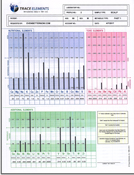
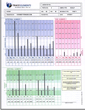
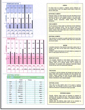
Each hair analysis contains a detailed 10-15 page report from the laboratory itself, which shows bar graph readings indicating high, low and reference range levels for toxic metals, essential minerals and significant mineral ratios. It also includes a metabolic profile, recommendations for diet and supplements based on individual results.

Unlike some labs that test hair tissue analysis, Trace Elements, Inc. does not wash the hair at the lab. Washing the hair removes some of the loosely bound minerals and can reduce some mineral readings by 50 percent or more.

The Comprehensive Hair Tissue Analysis report details graph results for 8 toxic heavy metals/elements, 15 nutritional minerals/elements, 15 additional elements, 7 significant mineral ratios, and 9 toxic metal ratios. Once you purchase the hair analysis from us, we send you a hair sample kit with instructions on how to take the hair sample.

Nutritional Elements: Extensively studied, the nutrient elements have been well defined and are considered essential for many biological functions in the human body. They play key roles in such metabolic processes such as muscular activity, endocrine function, reproduction, skeletal integrity, and overall development.

Comprehensive Hair Analysis Report

Toxic Elements: The toxic elements or "heavy metals" are well-known for their interference upon normal biochemical function. They are commonly found in the environment and therefore are present to some degree, in all biological systems. However, these metals clearly pose a concern for toxicity when accumulation occurs to excess.

Additional Elements: These elements are considered as possibly essential by the human body. Additional studies are being conducted to better define their requirements.

Significant Ratios: If the synergistic relationship (or ratio) between certain minerals in the body is disturbed, studies show that normal biological functions and metabolic activity can be adversely affected. Even at extremely low concentrations, the synergistic and/or antagonistic relationships between minerals still exist, which can indirectly affect metabolism.

Toxic Ratios: It is important to note that individuals with elevated toxic levels may not always exhibit clinical symptoms associated with those particular toxic minerals. However, research has shown that toxic minerals/metals can also produce an antagonistic effeect on various essential minerals, eventually leading to distrubances in their metabolic utilization.

For a complete overview of the various sections covered in the Comprehensive Hair Analysis report, please click here.

To view details of the elements measured and to order the Comprehensive Hair Analysis, please click here.

Once you purchase the hair analysis from us, we send you a hair sample kit with instructions on how to take the hair sample. You then send the hair sample to the Trace Elements lab, and the lab sends us the detailed report/results, which we then mail to you. (Please note: international customers outside of the United States will be instructed to send the hair sample to us, not directly to the lab).


information mark
For a list of Commonly Asked Questions about hair analysis, please click here.

Question Mark
Want to Ask a Question about Hair Analysis?
Email your questions by clicking here.

information mark
View our Autism and Mercury Poisoning page.

Additional Useful Information for Parents of
Children on The Autism Spectrum

Leaf motif Test Your Child for Toxic Metals
Testing your child for heavy and toxic metals is extremely important, and highly recommended. It will give you much needed info about your child's body. 
More info on heavy metal testing >>>

Leaf motif The ABCs of Autism
Autism is a disorder which is marked by impairments in social skills, behavior, and speech. Children with autism are often withdrawn, lack emotion and speech, and are extremely sensitive to sound and touch. 
More info on what is autism >>>


Leaf motif Signs & Symptoms of Autism
Since autism is a disorder and not a disease, it is not entirely accurate to refer to "symptoms" of autism. Instead, there is a range of signs and behavior patterns that indicate autism. 
More info on signs of autism >>>

Leaf motif Diets for Autism
Find out what diets can help your child in their recovery process.
Click for details >>>


Leaf motif Asperger’s Syndrome
Asperger’s Syndrome is an autistic spectrum disorder (ASD) that was first identified by physician Hans Asperger in 1944, but was only added to the DSM-IV in 1994.

As a result, many children have been misdiagnosed with Autism, Attention Deficit Disorder, Obsessive Compulsive Disorder and even Schizophrenia. 
More info on Asperger's Syndrome >>>

Leaf motif Autism & Mercury Poisoning
There is now a great deal of information available that tells us in no uncertain terms that toxic metals and chemicals are a causative factor in many cases of autistic spectrum disorders.  These would include harmful toxins such as mercury, lead, arsenic, cadmium, insecticides and pesticides
More info on Autism and
mercury poisoning >>>

Leaf motif Resources for Parents
A list of autism resources for parents and caregivers of an Autistic, Asperger's Syndrome, or PDD child: 
More resources for Autism, Asperger's, and PDD >>>


Bookmark and Share


Credit Cards Accepted
UPS Worldwide
All material provided on this site is for informational and educational purposes only.  It is not meant to replace or substitute for the recommendations or advice of your physician or medical provider. Please consult a health care provider regarding the applicability of any opinion or recommendation with respect to your symptoms or medical condition. Products are offered for use in therapies that may benefit normal function and structure. These statements have not been evaluated by the Food and Drug Administration. Products are not intended to diagnose, treat, cure, or prevent any disease.
© COPYRIGHT EVENBETTERHEALTH.COM   2004 - 2011